Royal Enfield Hunter 350: Quick Specs
| Feature | Details |
|---|---|
| Engine | 349cc, Air-Oil cooled, Single Cylinder |
| Power | 20.2 BHP @ 6100 rpm |
| Torque | 27 Nm @ 4000 rpm |
| Mileage (Claimed) | 36 kmpl |
| Real-World Mileage | 30-35 kmpl (City) / 35-40 kmpl (Highway) |
| Weight | 181 kg |
| Seat Height | 790 mm |
| Fuel Tank | 13 Litres |
| Brakes & Tyres | Disc (F&R) with Dual-Channel ABS |
| Warranty | 3 Years / 30,000 km |
| Price (India) | ₹ 1.50 Lakh – ₹ 1.75 Lakh (ex-showroom) |
Royal Enfield Hunter 350: Style and Design / Comfortability
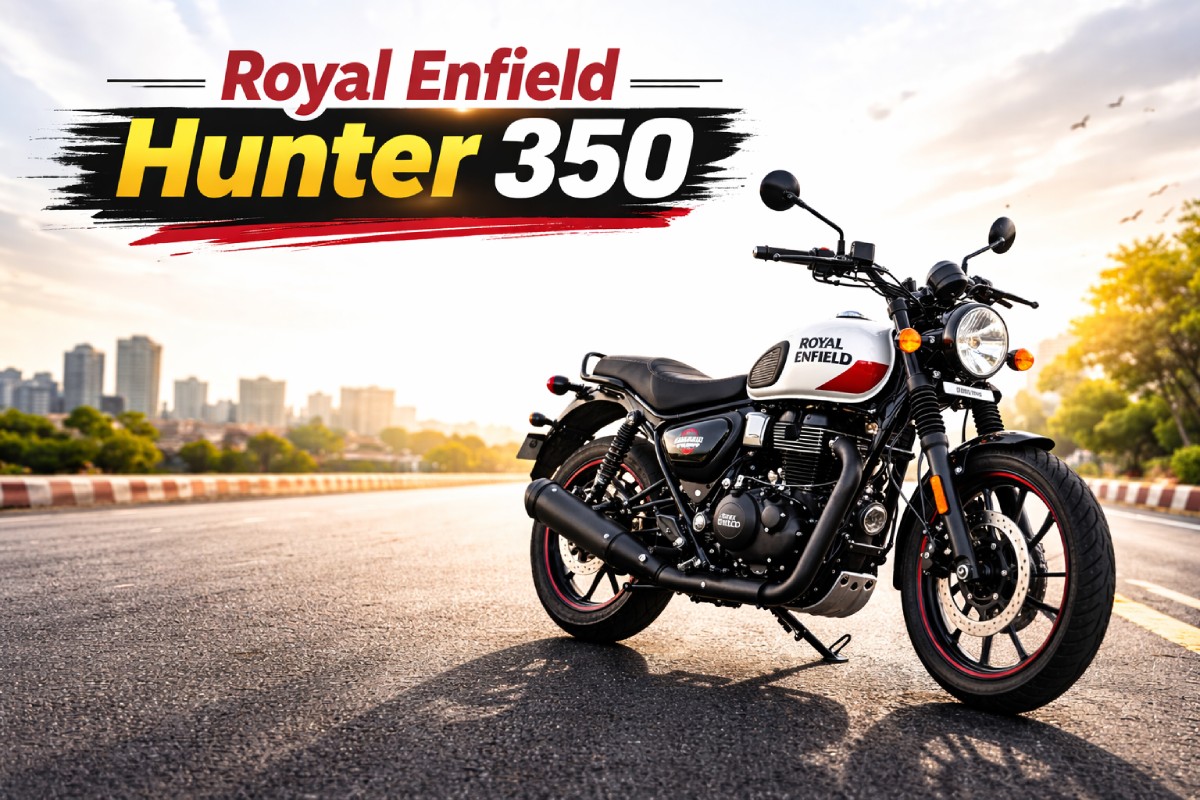
The Hunter 350 is basically the slim, gym-fit version of the Classic.
Royal Enfield chopped the fat to make it light and low. It looks like a modern roadster, not a retro replica.
The flat handlebar and side-slung exhaust give it a cool, streetfighter stance.
For short people, this is a blessing. The seat is low and narrow at the front.
Even shorter riders can flat-foot both legs easily in traffic. No tiptoeing here.
The pillion seat is small though. Your friend won’t complain for 10 km, but for a long ride? They will.
Royal Enfield Hunter 350: Engine Specs
It uses the same J-platform engine as the Meteor and Classic 350.
But the tuning is slightly different. The Hunter feels a bit more eager to rev.
The engine is smooth and refined until you push past 100 km/h. Then the vibrations creep in.
The gearbox is clunky when cold. Most owners on forums say it gets smoother after the first service.
It’s not a racing engine. It’s a relaxed, torquey motor built for city cruising.
Royal Enfield Hunter 350: Mileage
Let’s be honest here. If you buy a 350cc bike for mileage, you are making a mistake.
Real owners report 30-32 kmpl in heavy city traffic. On highways, if you keep it under 90, you might see 38.
The tank is only 13 litres. That gives you a range of around 350-400 km.
Don’t expect commuter bike figures. This is a lifestyle bike, not a fuel-saver.
Royal Enfield Hunter 350: Daily Driving Experience Review
I rode this thing for a week in the city and here is the truth.
It is brilliant in traffic. The light weight (181 kg) means you can filter through cars easily.
The suspension is stiff. You feel every pothole. It’s sporty, but your back might ache on bad roads.
Low-end torque is king. You don’t need to shift gears constantly. Roll on the throttle from 30 km/h in 3rd gear and it pulls cleanly.
On the highway, it feels stable but the wind blast hits you hard. There is no windshield.
The seat is hard. After an hour, you will want to get off and stretch.
What Owners Are Saying (The Real Talk)
After scanning forums, here is what people actually feel.
The Good (Why people love it):
- City-Friendly: It’s the lightest 350cc Royal Enfield. It doesn’t feel like a tank to manoeuvre.
- Looks Cool: The dual-tone colours and the roadster stance get a lot of attention.
- Easy to Ride: The low seat height gives immense confidence to new riders.
- Engine Refinement: Much smoother than the older RE engines. No more “thumping headache” on long rides.
- Fun Factor: It flicks into corners easily. It feels like a scooter with a heavy engine.
- Braking: The dual-channel ABS is a life-saver in panic situations. Good bite from the brakes.
The Bad (The complaints you must know):
- Stiff Suspension: The rear suspension is hard. Bad roads will rattle your bones.
- Vibrations: They appear around 90-100 km/h. The footpegs and handlebar buzz.
- Headlight is Weak: The stock halogen light is useless at night. You will need to upgrade to LEDs.
- Small Fuel Tank: 13 litres is small for a bike that could tour. You’ll be searching for petrol pumps often.
- Uncomfortable Pillion Seat: It’s tiny and hard. Not a bike for couples on long trips.
- Poor Rear View: The mirrors vibrate and show you a blurry image of your own shoulders.
- Stock Tyres: The tyres are okay in the dry, but some owners report they feel nervous on wet roads or white paint.
- Service Costs: It’s not expensive, but it’s not cheap either. General service costs around ₹2,500 – ₹3,000.
- Build Quality Niggles: Some owners report rusting on nuts and bolts after a few months. Keep it covered if you live near the coast.
Smart Comparison Section
- vs. TVS Ronin
The Ronin has better features (like a usable USB port and better headlight) and a more modern engine. But the Hunter feels more like a “Royal Enfield.” The Ronin’s resale value is unknown; the Hunter’s is solid. - vs. Bajaj Pulsar N250
The Pulsar is cheaper and more powerful on paper. It’s faster. But the Hunter has more “character.” The engine feel and thump are missing in the Pulsar. It depends if you want raw speed or a vibe. - vs. Royal Enfield Classic 350
The Classic is for relaxed, heavy cruising. It’s much heavier and handles like a boat. The Hunter is for quick city rides. If you are under 5’7″, the Hunter fits you better than the bulky Classic.
Safety Features
You get dual-channel ABS as standard. That is the main safety net.
The braking setup is good. It stops the bike confidently even from higher speeds.
But remember, the stock tyres are not the grippiest. Be careful in the rain.
The build is solid, so in a small drop, the crash guards and footpegs take the damage, not the engine.
FAQs
Q: Is the Royal Enfield Hunter 350 good for beginners?
A: Yes. It’s light, the seat is low, and the engine is forgiving. It’s one of the best bikes for a new rider who wants a “big bike” feel without the weight.
Q: What is the real mileage of the Hunter 350?
A: In the city, expect around 30-33 kmpl. On the highway, if you ride sanely, you can get up to 38 kmpl. If you ride hard, it drops to 28 kmpl.
Q: Is the Hunter 350 comfortable for long rides?
A: Not really. The stiff suspension and hard seat will tire you out after 200 km. It’s a city slicker, not a tourer.
Q: Which variant of Hunter 350 should I buy?
A: Most owners suggest the Metro variant. It gives you the dual-tone paint which looks premium and has better resale value. Avoid the base variant if you want the stylish alloys.